Tuesday, October 29, 2013

Best and Worst Use of Technology in Movies

I'm a nerd. I'm a geek. And I LOVE movies. This presents some interesting issues if you ever watch a movie with me: I CANNOT STAND the way technology is used and portrayed in movies, at least most of the time. Sometimes the writer/director/producer have no clue what they are doing with that technology. 

And therein lies the rub. Their use of technology is so baaaaaaad that it completely ruins the movie-watching experience for me: it's just annoying even though I usually end up liking the film.

At other times the technology makes it oh, so beautiful. 

I'm sure Neil deGrasse-Tyson feels the same way about how physics is portrayed in space. Oh, wait, he does, even when he actually likes the movie.

And Neil and I are not alone in this "fun". The geeks over at NASA watch the movie Armageddon to see who can find the most "impossibilities" in the movie. Apparently, the record is 168

And so here I present...

My Best and Worst Use of Tech in Movies


But first a warning and then a note.

WARNING: Movie plots and key scenes will be discussed. No complaining later about spoilers!

Note: The movie Hackerz will not be discussed or included in this list. In our house it is "the movie that shall not be named". It's right up there with Ishtar and Batman Forever. And The Red Baloon.

The Best
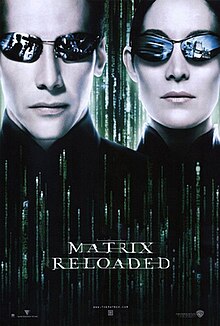

Matrix Reloaded (2003) - This one has to come first in my list because it marked an incredible "First" in movie history. In the movie there's this power plant where... oh, who cares? The movie wasn't that great. It served as a vehicle to get Neo into his epic battle with Elrond the Elf. And to teach us that French profanity sounds waaay cooler than English. But along the way Trinity does something incredible. She uses a real, unpatched SSH 1.0 buffer overrun vulnerability to hack into that power plant. She then changes the root password to Z1ON0101, and just like that, she is God on that system. When the movie came out in theaters you could use that hack to do some real damage. For the first time in history a fictional movie accurately portrayed a real hack.


Superman III (1983) - Before I go into just how cool the hack was in this movie, I do have to say that the rest of it is pure 1980s cheese. What was so cool about such a bad movie? Richard Pryor is a computer programmer who... OK, I laughed when I wrote that the first time. Richard Pryor... A nerd? Well, if he was he was one funny nerd. Anyway, he plays a software developer who writes a program that steals tenths and hundredths of cents and funnels them into his own account. Brilliant. And parodied countless times elsewhere. 


WarGames (1983) - A kid, with a cobbled-together computer, can connect into another computer a thousand miles away and use programs in a way someone didn't think about with possibly disastrous consequences? In the early-80's, playing off the Cold War fears, this was big time stuff but it wasn't far outside the realm of possibility. Modems were around, although they were incredibly slow and there really was no public internet. Phone phreaking was a real thing (until people stopped using fax machines and AOL). In 1986 I saw CompuServe for the first time and was floored. What David Lightman did in WarGames helped inspire me to pursue a career in computers. No joke.
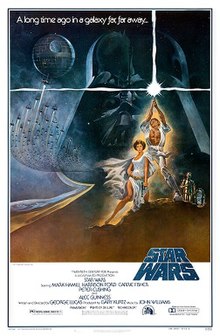

Star Wars Ep. IV (1977) - There is so much to say about this movie that I have to limit my remarks to one thing: R2D2, while inside the Death Star, teaches us an entire course on modern Information Security. That little droid can connect into a wall socket and advance the plot faster than any writer could, but I digress. He "talks" to the main Death Star computer and obtains all sorts of information (which he does again in Ep. V on Cloud City). He operates garbage compactors. He opens doors. And he does this even though he is an unauthenticated, untrusted intruder. In 1977, computer security was little more than a guard at the front door, so this isn't that big of a stretch. Where is their authentication? Why do they trust anyone who can plug into a terminal? There is no auth or trust so he can perform his tasks and gather information with impunity. 

Apollo 13 (1995) - They invented "a way to put a square peg in a round hole, rapidly." "We need to make this (square thing) fit into the hole for this (round thing) using nothing but that." 'Nuff said. If you don't know what that means, throw a party and watch one of the best movies of the 1990's. And then sell your house because it would be easier than cleaning it.

Sneakers (1992) - Good writing/directing and an AMAZING all-star cast. What could make this even better? How about some amazing hacking using old-school social attacks?  The theory of a key-to-end-all-keys is a bit out there but not 100% impossible. The best thing about this movie is that they use very little technology to break into a building overflowing with it. And it's the best River Phoenix movie out there. 


The Social Network (2010) - Not a bad movie, if you unplug the plot from reality for 90 minutes. The "Winklevi" portrayal by a single actor is amazing. What is more amazing, though, is Zuck's first "Facebook" hack where he collects information about coeds from various "Facebooks" of Boston-area colleges/universities. It is a VERY well-shot scene with explanations that actually make sense. Would love to hear a modern web developer poke holes in it, since I haven't coded in any of the platforms used in the hack (Python, AJAX, etc). Key point: what he did is completely possible and it was portrayed in a cool way.


Cloak & Dagger (1984) - A mid-80's kids movie? What could possibly be interesting in here from a geek perspective? How about hiding top-secret data in an Atari cartridge? And the only way to access it to play the game in a certain way. BRILLIANT! Yes, it's an 80's kid's movie so don't expect a lot of plot or character development.


The Girl with the DragonTattoo (2009) - Lisbeth (the main character) is a private investigator, of sorts. What does she investigate? People, using her computer. Or rather using their computer to investigate them with some awesome hacking using real tools and methods. 

And now, brace yourselves for...

The Worst


Clear and PresentDanger (1994) - I actually like this movie. I'm a big Tom Clancy fan and I was really into this movie right up until I heard the nameless CIA tech say, "OK, sweetheart, let's get to work!" Jack Ryan has just asked him to do something of questionable legality and high difficulty, so he starts talking to his computer. Now, I have no problem with nerds who talk to their computers. Shoot, I do it all the time using somewhat colorful metaphors. My problem with this movie, which almost makes this movie unwatchable for me to this day, is that he wasn't actually talking to a computer. He was talking to a StorageTek 9310 PowderHorn tape silo (you can clearly see the StorageTek logo on the robot arm).
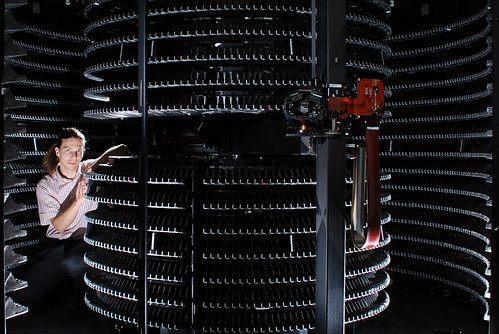

I'm sorry, a tape library robot is not a computer, no matter how you talk to it. It does look a lot more impressive than a mainframe (most likely what a CIA tech would have used to pull off this hack in 1994) with its arm swinging around but it cannot calculate squat. What it can do is store upwards of 150,000 tapes and several hundred terrabytes of data. Yes, those were impressive numbers considering the average desktop computer had less than 1 gigabyte of disk space.

Jurassic Park (1993) - If we were talking about how computers were used to create the film this one would be near the top of the list. But we're talking about how they are portrayed in the film. Nedry's computer setup is interesting (even Samuel L. Jackson can't hack into it!) but it is easily figured out by a little girl with big eyes. The worst part? An 11-12 year old girl knows how to use a $50K SGI workstation? Not on your life. And apparently not on her life either.


WarGames (1983) - Yes, this movie is in the best and worst category. I'm that fickle. Why is this one the worst list? For all the cool stuff they did with computers there is one thing they did that still bothers me 30 years later. When he first connects to the WOPR, David Lightman hooks it up to a sound processor to have it interpret the text into words, pretty revolutionary for consumer tech in his day, but it doesn't stop there. From then on through the film the WOPR can talk to him, and in the EXACT same voice no matter which workstation he is using. In 1983. No. Way. Oh, and the launch codes are cracked 1 digit at a time.
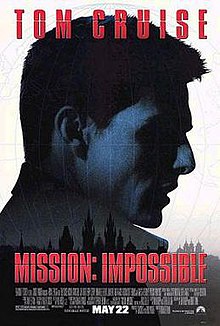

Mission Impossible (1996) - I won't go into the weird portrayal of email or AOL screen names, or whatever it is that Tom Cruise uses to communicate with Job, I suspended my disbelief on that one. What cracks me up every time is the hanging-by-a-wire ballet scene in the computer vault. A super-secret, super-expensive CIA computer, connected to nothing, that is incredibly hard to access? What exactly does it do? The antithesis of user-friendly or even usefullness. Why have such a secure room for a computer that holds digital data that is no doubt available elsewhere? Ugg. I'll stop now on that one because the next one is worse...


Enemy of the State (1998) - Will Smith and Gene Hackman in an action thriller? What could possibly go wrong? How about Jack Black using infinite zoom and 3D rotation on a grainy surveillance camera? (skip to 2:06 in this video)


Yes, this is one of Jack Black's earlier film roles where he plays a tech geek hired to pursue Will Smith at all costs. Including stretching the reality of 1998 graphics software and audience intelligence levels. 
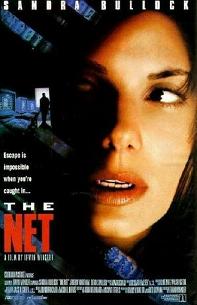

The Net (1995) - ID theft, corporate espionage, and public infrastructure in danger over the internet? Reality in 2013 but in 1995 it was a pipe-dream. If they had set the movie in the near-future (a la Minority Report) it would have made more sense. Instead they tried to twist 1995 technology to make it look like it could do incredible things that simply weren't possible. If they made that movie today people would probably just shrug their shoulders and say, "Meh. The NSA does that on a Tuesday."


Swordfish (2001) - This one is the absolute worst. I thought I was watching an action movie, not a laugh-out-loud comedy. There are just far too many situations that stretch their geek cred a little too far. The low point is near the beginning when John Travolta, soul patch and all, puts a gun to Hugh Jackman's head and asks him to hack in a DoD database protected with 128-bit encryption in 60 seconds while being, um... "distracted" and typing at what must be 300 WPM. Which invariably works. Because movies.

Honorable mentions from TV:

CSI: NY - "I'll create a GUI interface using Visual Basic to see if I can track an IP address." Wow. So much ignorance crammed into one sentence.


Numb3rs (2005-2010) - One of my favorite shows of the time but they constantly made me laugh any time they showed the inside of the FBI office. They put together quite the swanky FBI office in downtown LA with projected computer screens and great looking graphics but the prop computers sitting in telco racks are 15-year-old (at the time) 1990s-era Compaq servers. I have spent countless hours working on them, including the oft-represented Proliant 6500. If you look closely enough in some scenes the server had 1.6" 9GB drives. Those were smokin' systems in 1998. Now my phone has more storage and processing power. And none of them were ever powered on which would have made dialog in the near vicinity inaudible. 


NCIS - Arguably the highest rated show on TV right now but they still have their moments. Like having two people hacking on the same keyboard at the same time, where the hacker is hacking a single computer but the target cannot be isolated. How is the hack stopped? By the two 1D10Ts typing in the keyboard? No, by the main character unplugging the !@#$% computer. Brilliant.

And some parting thoughts...

I left out quite a few possible nominees on all categories to keep this concise. My wife complains that I am a little long-winded when it comes to things I am passionate about. I do not disagree. Neither does my son, apparently. 

When movie-makers or TV people use technology it doesn't take much to make it realistic. Just screen it for a geek or two, which are VERY easy to find, and your problem can be solved. Want to do some product placement with EMC to put one of their HUGE storage arrays in a key shot? Have it be in a datacenter where it belongs, not in the middle of a @#$% conference room where the 90 dB, 1400 CFM fans would make it nearly impossible to have a relaxed conversation. Use advisers who will properly vet how you portray technology, just as you would the military, planetary science, medicine, or any other scientific aspect of your film.

Then maybe my wife will stop elbowing me when I laugh at inopportune moments of impossible ridiculousness that is technology in movies.


Hold on a minute, what about ID4? How can you possibly not mention Jeff Goldbloom's magnum opus of hacking? Maybe because it isn't really that cool and definitely not totally impossible (i.e. it doesn't fit into either category above). His character was an EXPERT in communications. Who's to say he didn't figure out a way to connect via TCP/IP and upload a custom virus? The display graphics aside, for a moment, it could work…

Friday, October 11, 2013

How NOT to create a movie trailer

RE: An open letter to movie executives/staff

Subject: How NOT to create a movie trailer

I was watching Marvel's "Avengers" recently with my kids and was reminded again why I have a love/hate relationship with movie trailers. What reminded me? This...

Hulk Grabs Ironman, grabs hold of a building, and... no spoilers.

If you haven't seen the movie stop reading now and go watch it. Go ahead, I can wait. It was only one of the best reviewed and top money-making movies of 2012. That image comes at 1:54 in "Marvel's The Avengers Trailer 2 (Official)" on YouTube. Once you have seen the movie come back here and continue reading.

And now we continue...

Marvel has this weird habit of spoiling the penultimate scene from the movie in the trailer. Yes, it looks incredible. Yes, you spent 1/4 of your budget on the CGI for that scene alone. And, yes, you need to draw-in people with these fabulous shots, I get it!

How did this spoil the movie? Maybe my memory is just too good, I don't know... But, as I was watching the finale of the "Battle of New York" for the first time, I knew exactly how they would solve that little issue of Tony Stark falling toward the ground after "resolving" the invasion situation. Why? Because the trailer clearly shows Hulk catching Iron Man while stopping his momentum using a skyscraper.

Let me be clear: they used one of the most memorable, eye-popping scenes from the movie in the trailer, where it was just as memorable and eye popping.


Example #2: The Amazing Spider-Man Trailer 2

Spider-Man, hanging out with some electronics
At about 2:20, we see Spidey fall from the top of a building and catch himself while the top of the building falls all around him. Yes, it looks really cool and it is very memorable. THAT'S THE PROBLEM.

When the "disarm the weapon at the top of the skyscraper" scene came up in the movie we know exactly how Spidey is going to fall and whether or not he survives BECAUSE THEY ALREADY SHOWED US IN THE @#$%! TRAILER!

Have you ever read the book "Ender's Game"? If you haven't, don't watch the trailer for the movie. They give away one of the pivotal plot points in the movie right in the trailer.

OK, enough of the single-scene antics. This post is supposed to be about what a trailer is actually supposed to be. Should be simple, right? There's even a guide on eHow.com.

Where did the name movie trailer come from? According to Wikipedia, which is never wrong, they were originally called "trailers" because they "trailed" the end of the movie. The promotional shorts advertised an upcoming feature film and were designed to get people excited to come and see. Since people rarely stay after a big feature film (who wouldn't want to stay seated a few minutes longer after watching epics like "The Greatest Story Ever Told" or "Dr. Zhivago"?) so movie promoters moved them to run before the big feature. In today's theaters you can expect 12-20 minutes of trailers, depending on the theater company and the time of year. I think the longest I have seen is 25 minutes of trailers. It gets really bad in the early spring as the studios gear up for summer movies.

In the 70's the movie trailer was a simple structure: show the stars of the show, play a song from the movie, and maybe actually show some footage from the movie (some early trailers were a montage of scenes from other movies starring the actors). They were short and simple.

The 80's introduced us to the voice-over trailer and Dan LaFontaine, the most prolific and well-used voice in movie history. If you have seen any movie trailer in the last 30 years you have heard his voice. Don't recognize him? Try this on for size: In your mind, think of a movie trailer and say the words, "In a world where..." Was the voice in your mind a deep, gravely man's voice? That's Dan LaFontaine who voiced an impossible number of trailers. Unfortunately he died in 2008 but his body of work is tremendous.

Now we move on to today's movies. (I'm skipping the '90s and '00s because I'm lazy)

The formula for modern movie trailers is pretty standard...


Fast-cut scenes of action, silence/black with maybe some words, voice-over montage of key points in the movie, the villain reveal, and maybe a plot twist or two. Comedies, romances, and horror movies all have their own version of this theme but inside each genre the structure is remarkably similar.

So what makes a bad movie trailer? Here are my thoughts-
  1. Revealing key plot points in the movie. I've beaten this one to death but there are many others who have also illustrated this point
  2. Revealing the ending - There are several trailers released right now that out-and-out give away the movie's ending. For a remake of a famous movie, like Stephen King's Carrie, why not leave out the ending scenes for those young kids who don't know? Wouldn't it make a better movie if they found out the ending by watching the @#$!! movie? The funny thing is that the trailer for the original "Carrie" from the '70s gave away the ENTIRE plot right in the trailer. Pulled no punches. So I doubt the modern "Carrie" promoters thought twice about doing the exact same painful thing. 
  3. Revealing the villain and their intentions - Sometimes this is just as bad as #1. Sometimes discovering the villain is the entire point of the movie. (*cough* Unbreakable *cough*)
  4. Marketing the movie to be something it isn't. "Drive" was shown to be a "Fast and the Furious" wannabee, not a brooding drama with a little bit of driving thrown in. "Million Dollar Baby" wasn't really about boxing. "The American" wasn't actually a James Bond type of movie starring George Clooney even though it was a really good non-action movie.
Some movie trailers are better than the actual movie itself. Typically this happens because they take all the good stuff about the movie and cram it into a 3 minute trailer. This is a frequent occurrence for me. I can't count the number of times I saw a trailer for a movie, got excited to see it, and the movie was, in my ever-so-humble opinion, a dud. Like "Wreck-It-Ralph", "Wild Wild West" (that horrendous Will Smith movie), and Star Wars Ep. 1. Oh, and "Snakes on a Plane," the quintessential trailer-better-than-the-movie trailer.

Some people have taken this a bit too far and created amazing trailers for movies that don't even exist. I will get a good laugh if they come out with Ghandi II.

So what makes a good movie trailer?

Rule #1: Don't commit any of the infractions listed above. (Sorry, had to say it)
Rule #2: Show me just enough of the movie to make me want to go see it.
Rule #3: Give me the main idea of the movie but you don't have to tell me the EXACT plot.
Rule #4: LEAVE ME WANTING MORE. (most important)
Rule #5: Don't let Michael Bay make the trailer. He totally screwed up the trailer for The Island by giving us the entire plot in the first 30 seconds of the trailer. The movie-watching experience would have soooo much better with hearing Ewan McGregor give away the main plot point 1:17 into a 2:20 trailer.

With all this in mind, here are my "Best movie trailers of all time" as ranked by me.

Honorable mention: Spider Man. Not a bit of this trailer ended up in the movie. It is a bit hokey and has nothing to do with the actual movie but it did get people excited to see the movie. Unfortunately they went on to make several other trailers that violated just about all my rules for trailers.


#10 - Men In Black: The trailer does contain major plot points but doesn't give away to much of what's going to happen. The key thing they do is that you can't really tell just how much of a farce this movie turned out to be. It was only a few years post-ID4 (Will Smith's other alien movie) so we didn't know what to expect. I haven't seen my wife laugh that hard in a movie, except for maybe when we saw "Noises Off" for the first time.


#9 - Sin City: AMAZING trailer for a concept film that was way ahead of its time. Maybe someday I'll actually watch it.


#8 - 300: Once again, amazing visuals from a concept movie that pulled no punches with violence for the sake of violence. And you get the only quote that has actually been attributed to a Spartan in the movie (the part about fighting in the shade. Look it up).


#7 - Cloverfield: Just enough of a tease to make you want to see it. Unfortunately the movie was like an extended version of the trailer, although it was good in its own right. But the trailer was better.


#6 - The Matrix: "No one can be shown what the Matrix is." That tag line was EVERYWHERE in the summer of 1999. The trailer showed quite a bit of the movie but didn't give away the primary premise, which was so shocking at the time. I remember seeing it in the theater on opening night with some friends from work. During the big-reveal scene you could hear half the theater audibly gasp. My friend next to me said, "NO F-ing WAY!" (he actually said "F-ing", not the other word). This trailer lured you in, just as a trailer should. It even proved that you can show off big portions of the movie and not ruin the movie experience.


#5 - Transformers: This teaser trailer makes you wonder "what the heck did I just see?" The trailer really got the buzz going about one of the biggest movies of 2007. I won't comment on the quality of the movie but the trailer was amazing.


#4 - District 9: It starts out making you think it's a racial movie then shifts to something about aliens? No plot points, we don't even know who the major characters are going to be.


#3 - The Lion King: No, really. The original trailer that I remember seeing for the Lion King was the opening few minutes with the "Circle of Life" song, right up until the monkey-priest-guy holds up Simba for the crowd. That was epic. No plot points, no zany special effects, just awesomeness. Unfortunately I can't find that trailer online so you get this one, which is not nearly as good-


#2 - Star Wars VII. No, I mean "Austin Powers: The Spy Who Shagged Me." You see, that's the point: they toyed with the audience and played off the fact that Star Wars Ep. 1 was coming out the same summer. This was an AMAZING trailer to behold in the theaters.


#1 - Dirty Rotten Scoundrels: the ultimate teaser that shows nothing from the movie except the two main characters and a hint that they aren't exactly what they seem. None of this footage is from the movie, not even the voice-over.


So there you have it, film makers. Make good trailers and we'll all be happier together. I'd hate to swear off trailers completely.

Wednesday, September 4, 2013

A positive restaurant experience

It isn't every day that I have a positive restaurant experience with my autistic boys so I had to share our sheer joy.

Near the beginning of a long road trip we stopped for dinner at a Subway restaurant. As I was 10 seconds into the obligatory explanation of the ordering process to my kids, my son with Asperger says, “Dad, I understand,” and he steps up to the counter to order. In 20 seconds his order was complete and he had a huge smile on his face. Why?

Subway has switched to a 5-step ordering process. Stuck to the plastic shields between you and the sandwich items are a decals detailing each step. Each step has listed the possible options. The decals for each step are right in front of the item options making it incredibly clear the link between word and object.

(These are outlined on page two in this menu)
Step .5 (not listed): choose your meat
Step 1: 12”, 6”, salad, or flatbread
Step 2: Choose your bread (and toasted or not)
Step 3: Choose your cheese
Step 4: Choose your veggies
Step 5: Choose your sauce/dressing
Step 6: Do you want to make it a meal?

My son easily understood the choices to be made and, since he was able to complete his order without any parental help, he came away happy and content. All of these are rare for him in public spaces and left me not only speechless but tearing-up. Good thing I was ordering last.

This happened on the second day of our long road-trip. Any bets on where he asked to go for lunch/dinner for the remainder of the trip?

Thanks Subway!


Tuesday, August 6, 2013

Lack of Nuance in Reporting - Non-news stories


Hang on to your hats folks, this is earth-shattering news...

A new poll has found that Mormons may be the least-likely of any religion to smoke.

Poll: Mormons least likely to be smokers


Take a moment to let that sink in.

While you are pondering that latest bit of trivia, try this one on for size...

BYU remains the nation's bastion of college sobriety, according to the Princeton Review, which has named BYU the nation's top "stone-cold sober" school for the 16th year running.
- Emma Penrod, Deseret News 
 These are news stories published today, August 5th, by Utah's finest news source, the Deseret News.

In other news...


Science Has No Clue How Bicycles Really Work

The saying "just like riding a bike" has been around for ages. It refers to doing something that's easy to understand. But there's irony in that: Physicists have no clue how bicycles work, making them some of the most complicated things in the world.
- Travis Okulski, Jalopnik
 Back to your normal lives people, nothing to see here.

Thursday, December 13, 2012

Geek Links of the Week - 13Dec2012


Yeah, it's been a while. Work+life = no time for fun stuff like this.

In this week's post we cover everything from parade confetti and geek TV shows to online schools and police raids.

My Geek Links of the Week!

Pregame: Geekiest Ways to Cook a Turkey

What started out as an easy question on Slashdot quickly descended into hilarity...

"What self respecting geek doesn't go home to be pampered by Mom?"
"Don't you mean 'go upstairs' ?"


Link #1: Computer Viruses Can Kill in Ambitious Sci-Fi Web Series H+
“In upcoming sci-fi web series H+, people embed themselves with a chip that hardwires their nervous systems into the internet 24 hours a day — until a virus kills a third of the world’s population. How will survivors cope, and who unleashed the homicidal computer code in the first place?”
 - Hugh Stewart, Wired
A new series called H+ launched recently on  Webserieschannel.com. The series intrigues me to two ways...

1. The Scifi angle - The concept behind the story is that people can be implanted with a chip to interface their brains with the internet. At first glance the ability to access any information anywhere may seem like a good idea but, as with any other internet connected system, the inevitable happens: a virus spreads and kills 1/3 of the world's population virtually overnight. This reminds me of Ghost in the Shell, another series I never had the time to fully appreciate. Setting aside the apocalyptic theme for a moment, the story of how this was developed and sold to the public would make for a great piece as well. How would you convince people that the system was secure? Wouldn't people be wary of the devices? The possibilities are endless.

2. The direct distribution angle - This series was developed and produced by people that are no strangers to Hollywood and the entertainment industry (The director previous was attached to an X-Men movie) yet they chose to do this on a low budget (shooting in just 29 days) and release it as a web series. Perhaps they pitched it to some TV execs and were turned down? More likely this was done in their spare time as something fun to do and build their resume. Netflix and other online distributors are already producing properties that will never touch a traditional cable or satellite. When you are not bogged down with a studio or media corporation breathing down your neck the creative process can be much more free.

At any rate it will be interesting to see where this goes. The trailer looks really cool.


Link #2: The surprising, stealth rebirth of the American arcade
“The arcade industry is dead in the United States—everyone knows it—done in by a combination of rapidly advancing home consoles and rapidly expanding suburbanization in the late '80s and early '90s. The only people not in on this bit of conventional wisdom are the ones who happen to be opening a surprising number of successful new arcades around the country.”
 - Aurich Lawson, Ars Technica
This one is close to my heart. As a pre-teen I spent (wasted) a lot of money playing video games in arcades, amusement parks, and convenience stores. I have a special place in my heart for Super Mario, Pac-Man, and Gallaga. One of my fondest memories as a young child was playing Joust and Night Driver (the really old sit-in version) at a now defunct bowling alley near my Grandmother's house. A good friend of mine from high school is into collecting and restoring these old arcade games, which he does as a side project. PBS even did a documentary about it not long ago.

These old electronics are in danger of going away completely. As time goes by the plastic components degrade and eventually the circuit boards fail. The cool part is that you can buy really small devices to plug into your TV to emulate just about any old arcade game but the experience may fall flat. Nothing can compare to the old style way of standing in line with your quarter lined up on the machine to mark your place.

For some serious 80's nostaglia, check out the book "Ready Player One".


Link #3: 106 Passwords that BlackBerry 10 won’t let you use
“Deep in the heart of the BlackBerry 10 OS is a list of 106 passwords that you will not be able to use. We will probably see this list being added to over time.”
 - Rapid Mike, Rapidberry.net
I like the fact that RIM is taking a proactive approach and simply disallowing the most common passwords, forcing you to choose something a little less common. But this is chasing your tail: when you stamp out the 100 most common passwords they are replaced by the next 100 most common passwords. Users want ease of use and if you allow non-complex passwords in your app your users will use them. Ultimately this process will lead to the banning of the entire dictionary of single words. What's next, moving on to banning word combinations? Hint: many of the currently banned 106 passwords are more-than-one-word or letter/number combinations.

In the end, all it takes to be secure is a haystack.

Speaking of weak passwords...


Link #4: Update: New 25 GPU Monster Devours Passwords In Seconds
“The system was able to churn through 348 billion NTLM password hashes per second. That renders even the most secure password vulnerable to compute-intensive brute force and wordlist (or dictionary) attacks. A 14 character Windows XP password hashed using LM, for example, would fall in just six minutes.”
 - Per Thorsheim, organizer of the Passwords^12 Conference
Read that quote again. They can crack ANY Windows XP password that was hashed using the LM hash in under 6 minutes (XP has a 14 character limit on passwords). They used off-the-shelf components that are easy to acquire, along with an open-source HPC platform to create a monster password cracking platform. This attack does mean that the attacker must have access to the actual password hash, which requires OS access, so the actual threat your typical user is low, but an attacker with physical access to a machine can easily take it over without changing any passwords. They can read the local admin password hash using some common tools, look it up in a hash table, and now they have root access.

The writing is on the wall: passwords are not secure. The technology to crack passwords is gaining ground. How long until we hear about someone who used AWS or Windows Azure, with a stolen credit card, to create a password cracking cloud service? We need something much more secure: multi-factor auth seems to be a possible alternative (something you know + something you have).

Why did Jeremi Gosney create this password cracking system? He was one of the first researchers to publish the list of common passwords after a list of password hashes stolen from LinkedIn was published online, but that's not the end of it. He is quoted in the article as saying, “I have way too much invested in this to not get some kind of return out of it.”


Link #5: POLICE RAID HOME OF 9-YEAR-OLD PIRATE BAY USER, CONFISCATE HER ‘WINNIE THE POOH’ LAPTOP
“Copyright enforcement might be getting out of hand in Scandinavia. As anti-piracy groups and copyright owners continue to work with authorities to curtail piracy in the region, police this week raided the home of a 9-year-old suspect and confiscated her “Winnie the Pooh” laptop”
 - Zach Epstein, BGR
This one is a trip, we'll have to wait to see how it plays out. Apparently...

  1. A 9-year-old girl (in Finland?) has her own laptop.
  2. She searches for songs on Google by a popular Finnish band, Chisu.
  3. Goog pointed her to links on The Pirate Bay.
  4. She clicks the links but the downloads failed.
  5. Her father takes her to a store and they buy the CD.
Meanwhile....
  1. One of the ISPs involved in her online activity (not clear if it was her residential ISP) flagged her activity.
  2. The ISP reported it to the Copyright Information and Anti-Piracy Centre (CIAPC), a non-profit anti-piracy organization.
  3. CIAPC contacted the family and demanded they pay a 600 Euro fine and sign an NDA.
  4. The father declines the offer.
  5. Police raid the home, confiscating the laptop and other items as evidence in the case.
The exact details are still fuzzy and it will take some time to clear all the legal facts in the case. For a moment we will assume all the alleged items above are true.

This brings up a lot of questions-
  1. Can a 9-year-old be held liable for not fully understanding copyright law online?
  2. Can you be legally liable for entering a search term on a search engine and then clicking on a link?
  3. What should be the legal or civil penalty if that link is not from a valid source?
  4. In the case of a simple infringement, even in the case where there IS infringement, was a police raid an appropriate response?

The quote from the father sums it up pretty well-
“I got the feeling that there had been people from the Mafia demanding money at the door,” the girl’s father said when recounting the police raid. “We have not done anything wrong with my daughter. If adults do not always know how to use a computer and the web, how can you assume that children or the elderly – or a 9-year-old girl – knows what they are doing at any given time online?”


Link #6: Researchers find Megaupload shutdown hurt box office revenues, despite gains for blockbusters
“In this paper we make use of a quasi-experiment in the market for illegal downloading to study movie box office revenues. Exogenous variation comes from the unexpected shutdown of the popular file hosting platform Megaupload.com on January 19, 2012. The estimation strategy is based on a quasi difference-in-differences approach. We compare box office revenues before and after the shutdown to a matched control group of movies unaffected by the shutdown.”
 - Abstract from the study, Munich School of Management and Copenhagen Business School
What does all that mean? Here's the money quote- “In all specifications we find that the shutdown had a negative, yet in some cases insignificant effect on box office revenues.” (emphasis added)

The researchers found that shutting down Megaupload had a negative effect on some box office returns. It did NOT have a positive effect in any case. That seems to follow the argument that pirates actually spend more money than the amount that they supposedly pirate.

Disclaimer and clarification: I do NOT endorse the stealing of intellectual property but I am most definitely FOR loosening digital copyright rules. This is a losing battle on all sides. I'm not sure there is a perfect answer but it is certainly not the situation we have now.


Link #7: Police documents found in parade confetti
“Parade-goers in New York City say they found shredded police documents mixed in with confetti at the Macy's Thanksgiving Day Parade. The documents contained confidential information, including detectives' Social Security numbers, bank information and unveiled undercover officers' identities, WPIX-TV, New York, reported.”
 - UPI
Who knew that you could steal someone's ID simply by watching a parade? }B^)

Of course Macys, NYPD, and Nassau County authorities (where the documents apparently originated) said they were investigating how such documents made it NYC to be used in the parade. Macys even said they used only commercially produced, multi-colored confetti and does not use shredded paper.

The moral of the story: EVERY company/organization that handles sensitive info MUST have a well-defined, trustworthy, and audited document retention and destruction policy. If not you are asking for trouble.


Link #1: Rise of the code schools
“Learning to code used to involve a school computer room, a bearded teacher in a cardigan, and a book the size of an encyclopaedia. Not any more. To the delight of shoulders everywhere, there’s a new breed of code school on the scene: one that expects no physical attendance, that won’t put you on the spot in front of the class, and doesn’t even require a textbook. Welcome to the online code school.”
 - PCPro.com
I ABSOLUTELY LOVE THIS!!!

Online learning has come a long way. I took some online college courses in '06 and hated the experience. In the past year I have taken courses from Khan Academy, codeacademy.com (along with my 10-year-old son).

Their user interfaces are incredibly easy to use. Even my kids love it because they make learning fun and easy. Isn't that what makes a good teacher in a real school?

Brick and mortar schools are in for some serious competition. And, yes, competition is a good thing.


}B^)

Sunday, September 9, 2012

A Logical Approach To The Healthcare Debate

There are a lot of things wrong with the recent Supreme Court decision to uphold Obama-care but, rather than speak to the political or legal aspects of the matter, I would like to take a more reasoned approach to resolving the issues in the healthcare industry. No, I don't believe it is a crisis but it does need fixing.

Do you like your health insurance provider? No? I doubt many people do, given how many people think the healthcare system needs a complete overhaul.

Should a corporate or government entity, such as a health insurance company or the health department, decide what care you get and how much you should pay for it?

I will answer this question with an analogy: should everyone be required to have auto insurance? The answer in our current American society is an emphatic "Yes!" but only if you drive a car. If you choose not to drive a car you are not required to purchase this service. Who enforces that law is another story (hint: it's NOT the federal government) but think about auto insurance in a different way: do you use your auto insurance to pay for periodic maintenance? Oil changes? Windshield wipers? How about gasoline? The idea is simply idiotic. It is almost always cheaper in the long run to pay out of pocket for most maintenance items for today's practical car. I use term "practical car" on purpose because if you have an expensive luxury or sports car the economics are much different. We have auto insurance as a hedge against the financial impact of being in an serious accident. In a two-party vehicle accident, where you are at fault, you end up paying for the following items for all people involved (drivers, passengers, and pedestrians)-
  1. Repairs to both vehicles
  2. Medical bills
  3. Salary for missed time at work
  4. Pain and suffering
To revisit the earlier question, let's try it with a different spin: should a corporate or government entity, such as a auto insurance company or your local department of motor vehicles (which we all love!), decide what auto maintenance you get, the price the mechanic will be paid, and what your portion of the bill will be? Does that not sound patently ridiculous? The auto-insurance industry is also heavily regulated but it allows for much greater competition and consumer choice.

Now it's time for a little history lesson. Health insurance came to popularity in the 1950s as a benefit from employers looking to attract top talent. During the post-WWII economic boom employers, desperate to hire the best talent from a very constricted pool of workers, looked for ways to increase the benefits package offered to employees while not increasing their taxable income, which would move them up the marginal tax bracket scale. Employers added all sorts of non-taxable benefits-
  1. Health insurance
  2. Dental insurance
  3. Club memberships (health, golf, diners, etc.)
  4. Expense accounts
  5. Company cars
  6. ...the list goes on and on...
Non-taxable benefits are important because the employee sees more benefit per dollar spent by the employer than they would by increasing their salary by the same amount.
In countries with very high tax rates this effect is amplified. As an example, Israel's tax burden (income tax and nation tax combined) ranges from 35-58% plus a 16% VAT on top of every purchase. In that country companies routinely give employees free on-site meals, gas/commute allowances, and many other employer provided benefits. I worked for an Israeli-based company in the late 1990s and was astounded at all the perks my Israeli counterparts were using and they were equally astonished at the higher salary levels and lack of company provided benefits in the US.

After 50+ years of employer-provided healthcare insurance in the US it is now so engrained in today's society that many people would be upset if they received a job offer that didn't have comprehensive health insurance in the benefits package.

The answer to the health care debate may be as simple as changing over to a system where we only need health insurance for the same reason we have auto insurance: as a hedge against catastrophic health issues. 

To follow the auto insurance analogy, do you pay your doctor directly for any of the following-

  • A simple check-up or annual/sports physical?
  • A quick cold/flu visit, typically to obtain a prescription cough medicine or antibiotic?
Have you ever looked at your medical bills paid by your insurance company? Do you even know how expensive it is to see your primary care physician? Would you go less or more if you had to pay cash every time you went? You pay your mechanic every time you get an oil change, why not pay your doctor when you get a physical? Most people do not know what their doctor charges for a "standard" office visit. If you had to write a check or pull out your credit card every time you visited your doctor, would you go less frequently?

Would you continue going to an auto mechanic if their prices were 30% more than the shop next door? What about the rates your doctor charges? This isn't even relevant in today's healthcare system because most of the healthcare prices you "pay" through your insurance company are pre-negotiated between your doctor's network and the health insurance company.

How do we get our healthcare system to the point where health insurance is "liability only," to coin a phrase from the auto-insurance industry? There are already healthcare plans that only cover severe or debilitating illnesses.

There has been a push recently toward a "single payer" healthcare system run by the federal government. In a way we are very close to that type of system in that we have a "a couple of payers" system. Those payers are the health insurance companies. The system itself would change greatly if that buying power were taken away from the heath insurers and placed in the hands of the consumers.

In order to do that we need to do something drastic, and this is the meat of my argument: eliminate employer-based healthcare coverage, the majority of all health insurance plans. What incentive would employers have to eliminate this valuable benefit? The answer is quite simple: repeal the federal income tax. To make up for it the federal government could switch to a flat tax or a consumption based model which would be less cumbersome and may even reduce the bureaucracy of the Department of the Treasury.

What would happen if the income tax were eliminated? Many employer perks would end. The pendulum would swing further toward cash-based compensation and employees would be free to spend their money on the healthcare program that was right for them. They could remain in a health-insurance plan that pays for everything or switch to a plan that covers those severe or debilitating illnesses that would otherwise lead to bankruptcy.

In the end this system would allow for a much more open marketplace where consumers and doctors are free to decide on their own treatment plans as well as competition in pricing and services.


Thursday, June 28, 2012

Geek Links of the Week - 25June2012

Wow, it's been too long since I posted this...
This week's links cover everything from DNA research, XBox forensics, and gadget hacking! I usually try to limit it to 5 links but it this week I just couldn't do it! Here ya go with 7...

My Geek Links of the Week!


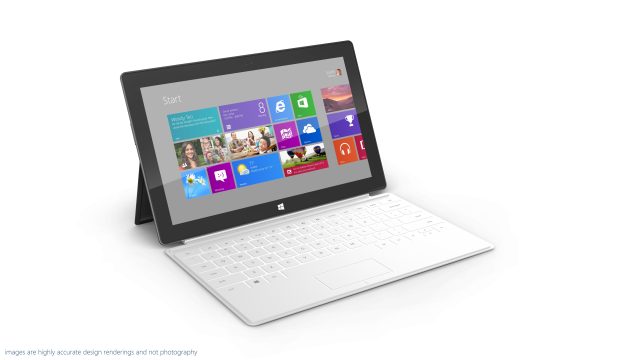
Link #1: Microsoft Surface: a gentle kick in the teeth of the OEMs
“To allow Windows 8 to compete with iOS, Microsoft needs hardware to compete with the iPad. Bad hardware would jeopardize Redmond's ability to play in the tablet space, but the PC OEMs have established for themselves a track record of producing little else. And while many of the OEMs have produced Android tablets to try to compete with the iPad, they've also consistently failed to match its quality. ”
 - Peter Bright, Ars Technica
I have mixed feelings about this, having been a consumer of the Windows ecosystem for some time. Building PCs in the mid-90's was a real kick and the best way to create your dream machine for (typically) less money than buying off-the-shelf systems. Those days are long gone but not entirely forgotten (my sister built her own cheap PC a couple months ago).

This move by MS shows just how broken the old Windows OEM model is when compared to Apple. Is this move by MS a permanent one or, as the author suggests, a kick in the pants of the OEMs to get moving and to start out-innovating Apple at their own game?


Link #2: Every Watt Matters!
“Data center operators are touting metrics like PUE to demonstrate energy efficiency leadership, but there is more to consider. Data centers exist because they can more efficiently and economically scale to house servers that host online services used by enterprises and consumers. However, we need a more holistic approach to ensure that we are minimizing the energy consumed to run these services. Performance matters, but so does the energy consumed to deliver that performance”  
- Dileep Bhandarkar, Distinguished Engineer, Microsoft Global Foundation Services
Most people don't know much more about internet than to say it is, "In the cloud somewhere." Ted Stevens wasn't that far off when he esoterically described it as a "Series of Tubes." And then you see pictures like these from Datacenter Knowledge...


When you dig down into it all major internet services start in a datacenter where the equipment is hosted. Those facilities are big business, difficult to run, and incredibly expensive.
So it goes without saying that building facilities requires a lot of engineering and cost-benefit-analysis to justify building such a large facility. This article goes into a lot of details around power utilization, PUE, and other metrics that show how well MS datacenters are using the power they draw. Very interesting analysis.


Older stuff...


Link #3: 30 best features of Windows 8
The Metro start screen may not be everyone’s cup of tea, but it does have undeniable benefits
I have been using Win8 since the Consumer Preview last December and I have to say I love it, even on a laptop and in "desktop mode" (where I don't really use Metro apps). The list of features I like is quite long: split touch keyboard, new task manager, Skydrive integration, split screen metro apps, universal search, the advanced file copy features... too many to mention! When you run it on a device with a touch screen it really shines! Remember those touch screen tablets (i.e. laptops with swivel screens) that no one really bought? Now you can use one to run Win8 and it will amaze you. Just make sure you put an SSD in it before you start!


Link #4: Radioactive man? Milford resident pulled over by state police
“Mike Apatow was minding his own business Wednesday, driving to an appointment for work in Washington Depot when a state police car appeared suddenly and signaled for the Milford resident to pull over. Apatow, 42, was entering Interstate 84 in Newtown when the cruiser appeared, and he had no idea what he'd done to merit police attention. It turns out he didn't do anything. But earlier that day, Apatow, who'd experienced a recent spike in his blood pressure, had a nuclear stress test at Cardiology Associates of Fairfield County in Trumbull. In the test, a small amount of a radioactive material is injected into the veins and used to help track blood flow to the heart.”
- Amanda Cuda, ctpost.com
So a guy is driving down the road in his vehicle and the State Police can detect if he is radioactive? First off, that's amazing but it makes you think for a minute. Yes, the technology to detect low levels of radiation, in an effort to find possible unauthorized people transporting active materials (i.e. terrorists/criminals), but do they really need it? Do we live in a world where this is necessary or is it cheap enough that they decided to do it because they could?


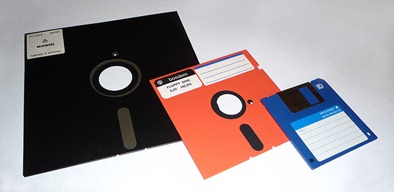
Link #5: The Floppy Disk means Save, and 14 other "old people" Icons that don't make sense anymore
“What happens when all the things we based our icons on don't exist anymore? Do they just become, ahem, iconic glyphs whose origins are shrouded in mystery?”  
-  Scott Hanselman, hanselman.com
This one made me think for a minute. There are all sorts of technology that my kids will never have to use that were necessities only 10 years ago. This article takes a different spin on it: look at the icons on your computer that mean things like the save button, radio buttons, folders, etc. Will my kids even understand what those icons mean? Will they know why we call them "radio buttons"? What is a folder? What is CC:?
OK, I'm old.


Link #6: US self-defence expert banned from entering UK
“Tim Larkin tried to board a plane from his home in Las Vegas on Tuesday, but was given a UK Border Agency letter saying "his presence here was not conducive to the public good". Mr Larkin, who was due to host seminars, told the BBC the move was a "gross over-reaction". The Home Office said he was subject to an exclusion order.” 
- BBC News Service
The British consider an unarmed civilian to be a threat to the public good because he is trained in self defense and the use of lethal force? Or it is because he is critical of the self-defense laws on the books? There are many limitations on speech in the UK so this should surprise no one.


}B^)